
1995 saw the eventual end to the fighting of the Bosnian War, but it also saw the worst atrocities to happen in Europe since World War ll.
It started with a significant move by President Tudjman in January, with his decision to terminate the UN operation in Croatia. Eventually it was agreed that the UN presence would remain but at a lesser level, clearing the way for a return to fighting between the Croats and the Croat-Serb forces. By May, Croatia reclaimed territory in Western Slavonia that had been taken during the fighting in 1991.
Later in the same month, six NATO planes were deployed to destroy a Serbian ammunition dump close to Pale, in response to the Bosnian Serbs refusal to return stolen UN heavy weapons. Serbs shelled ‘safe areas’, killing approximately 70 civilians and 150 injured. Serbs retaliated by taking nearly 400 UN personnel hostage, using them as human shields against the air strikes by holding them in areas of key potential targets. Additional British, French and US troops, around 12,500 in total, were sent into the region as ‘rapid reaction’ to the crisis, which eventually saw the hostages released.
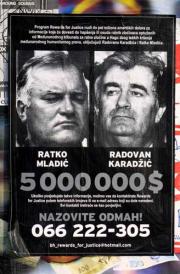
On the 11th July 1995, Serb forces captured Srebrenica, the UN declared safe haven by General Morillon in March 1993. Srebrenica, in eastern Bosnian was captured under the guidance of General Mladic. More than 8000 men were killed in the Srebrenica Massacre. The 400-strong contingent of Dutch peacekeepers – UNPROFOR failed in their mandate to prevent Srebrenica’s capture by Serb forced, and for the massacre that followed. The ICTY rules this event as genocide.
Two weeks later on the 25th July, Zepa, another ‘safe area’ fell. Followed soon after by a third, Bihac. As a result, International crisis talks were held in London. The talks failed to resolve the disagreements over airstrikes; the US wanted a major NATO air operation, whilst British and French were still reluctant.
However, a significant series of events changed the course of the conflict between July and August 1995. On the 24th July, it was announced that the Croatians had agreed to provide ‘urgent military assistance’ to the Bosnian troops. A joint military agreement between Tudjman and Izetbegovic, also known as Operation Summer 1995. The combined forces gained control of Glamoc and Bosansko Grahovo as well as isolating Knin from the Republika Srpska. On 28 July, with the Bihac enclave under increasing Serb pressure, 10 000 Croatian troops crossed the border and attacked Serb positions. It is obvious the Croat forces had prepared carefully for this offensive, and their rapid advance in the next few days relieved the pressure on Bihac and constituted probably the most severe military set-back for the Bosnian Serbs.
On 4 August, Croatian forces launched an attack on the Serbs in the Krajina region of Croatia. In three days the Croatians had retaken the region, which had been under separate Croatian Serb control since early 1991, and up to 200 000 Croatian Serb refugees were pouring into northern Bosnia. While Croatian forces began to build up on the borders of Eastern Slavonia, the one remaining Serb- held region in Croatia, Croatian and Bosnian forces began to advance into central Bosnia and along coastal areas.
With new Presidential elections in 1996, Clinton was more determined to end the Bosnian War. President Clinton launched a new diplomatic initiative, sending an Assistant Secretary of State, Richard Holbrooke, into negotiations with the major powers and the warring parties. The new proposal kept Bosnian’s borders in position with 49% of the territory for the Serbs, and Croats and Bosnians sharing the remaining 51%. It differed from previous suggestions by having different maps and rejecting the idea that the two entities of Bosnia could form a coherent whole.
A significant move late in August was the withdrawal of UN forces from Gorazde. Although widely regarded at the time as a betrayal of the Bosnian Muslims, in reality it was a strategic withdrawal designed to lessen UNPROFOR vulnerability, and thus avoid the risk of another humiliating hostage crisis. The major French-UK objection to air strikes had now been resolved.
On 28th August Serb forces shelled the Sarajevo Markale marketplace killing 37 civilians. It was just want the American’s had been waiting for. The next day, more than 60 NATO planes launched a series of attacks on Bosnian Serb targets, destroying communication facilities, ammunition depots and command posts. These were the first extensive air attacks of the war, and signified that NATO would not allow the Bosnian government to lose.
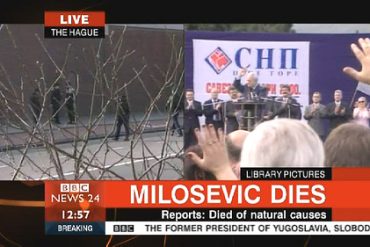
During the NATO bombing, whilst the Bosnian Serbs were at their most vulnerable, the leaders were summoned to a meeting in Belgrade. Milosevic and the President of Montenegro, President Bulatovic called the meeting in an attempt to bring the Bosnian Serbs back in line, after the 2 years of fighting for the Serbian cause. Milosevic demanded that an agreement was signed for him to take control of the peace talks on the behalf of the Bosnian Serbs. As a result, negotiations could begin in earnest for the first time.
Holbrooke’s goal was for the warring parties to come together for a peace conference. For the Serbs he offered recognition for the Republic of Serbia in Bosnia: one Bosnia with two parts. And for the Bosnians he offered a US troops enforced peace deal. Eventually both sides agreed to withdraw their heavy weaponry from Sarajevo and US air strikes were called off. Croat and Bosnian forces used this as their opportunity to win back some last minute territory, sending Serb refugees flooding into Serbia and Montenegro. The Croats, with little to gain, heeded the warnings from the Americans and agreed to the ceasefire. The Bosnians took a little longer to convince, but after water, electricity and power had been returned to Sarajevo, they too agreed and thus ending the longest siege in modern history.
On 8th September, after intensive shuttle diplomacy by Holbrooke, Bosnia, Croatia and Serbia accepted a US-brokered agreement aimed at ending the fighting in Bosnia. On 26 September, at talks in New York conducted by the Contact Group, the parties to the conflict agreed that there would be a single Bosnian state with a federal constitution, and accepted broad constitutional principles, including a presidency, a parliament, a constitutional court and free elections.
On 5 October, the parties agreed to a Bosnia-wide cease-fire, followed by Proximity Peace Talks in the US, and eventually a peace conference in Paris. The cease-fire began on 12th October and has gradually been taking hold. On 1st November, the Proximity Peace Talks began at Wright-Patterson Air Force Base in Dayton, Ohio with the aim of clearing away obstacles and reaching an agreement that would make possible a formal peace conference. It is anticipated that, in the event of a peace accord, a 60 000-strong multinational military force will be deployed, with 20 000 troops from the US and a contingent from Russia.